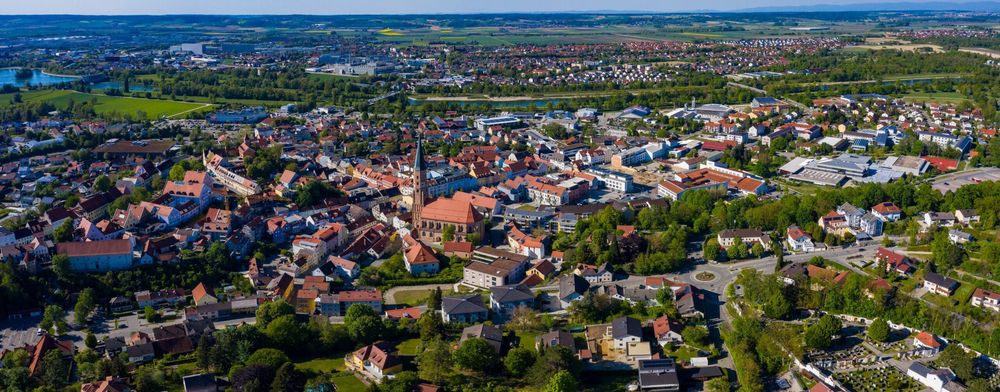
Rent construction machinery in Dingolfing – your rental fleet for access at height & industrial logistics
Dingolfing is one of the most production-dense industrial locations in Lower Bavaria. Besides Bavaria's largest automotive plant, the town is home to automation service providers such as SAR Elektronic, food-processing companies such as Develey and a dense supplier chain that works to the same just-in-time principles as the assembly lines themselves. Anyone who has to rent construction machinery here calculates not in days but in delivery windows: the machine must be in place at the shift changeover, the instruction must be documented before work starts, and proof of the emissions class must be available immediately on request from the plant safety officer.
Luibl supplies work platforms, telehandlers, forklifts and construction machinery from a workshop-inspected rental fleet with its own low-loader fleet. The connection Passau–Dingolfing runs directly via the A92; no third-party-haulier step that makes time windows uncontrollable. The transport date and terms are stated bindingly on the basis of your specific delivery address and time requirement.
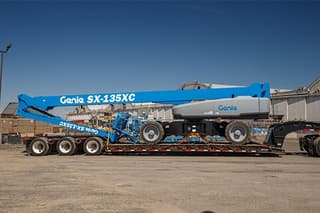
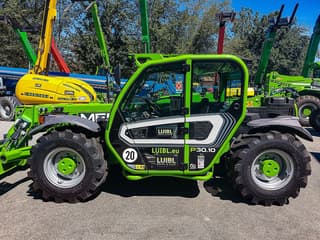
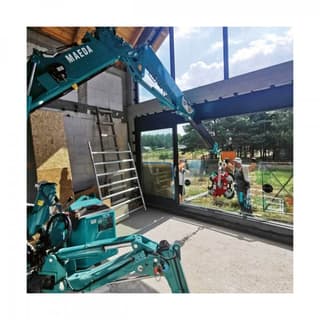
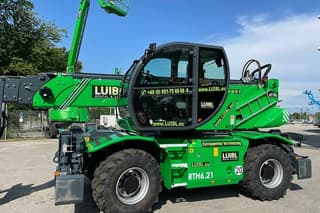
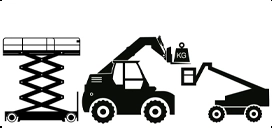
Work platforms, telehandlers and forklifts at the Dingolfing location
Two requirement profiles meet at the Dingolfing industrial location: on the one hand, hall maintenance and plant assembly under strict works requirements (emissions class, floor loading, non-marking); on the other, classic outdoor construction and development work on the industrial plots around the town. Luibl's rental offering covers both profiles.
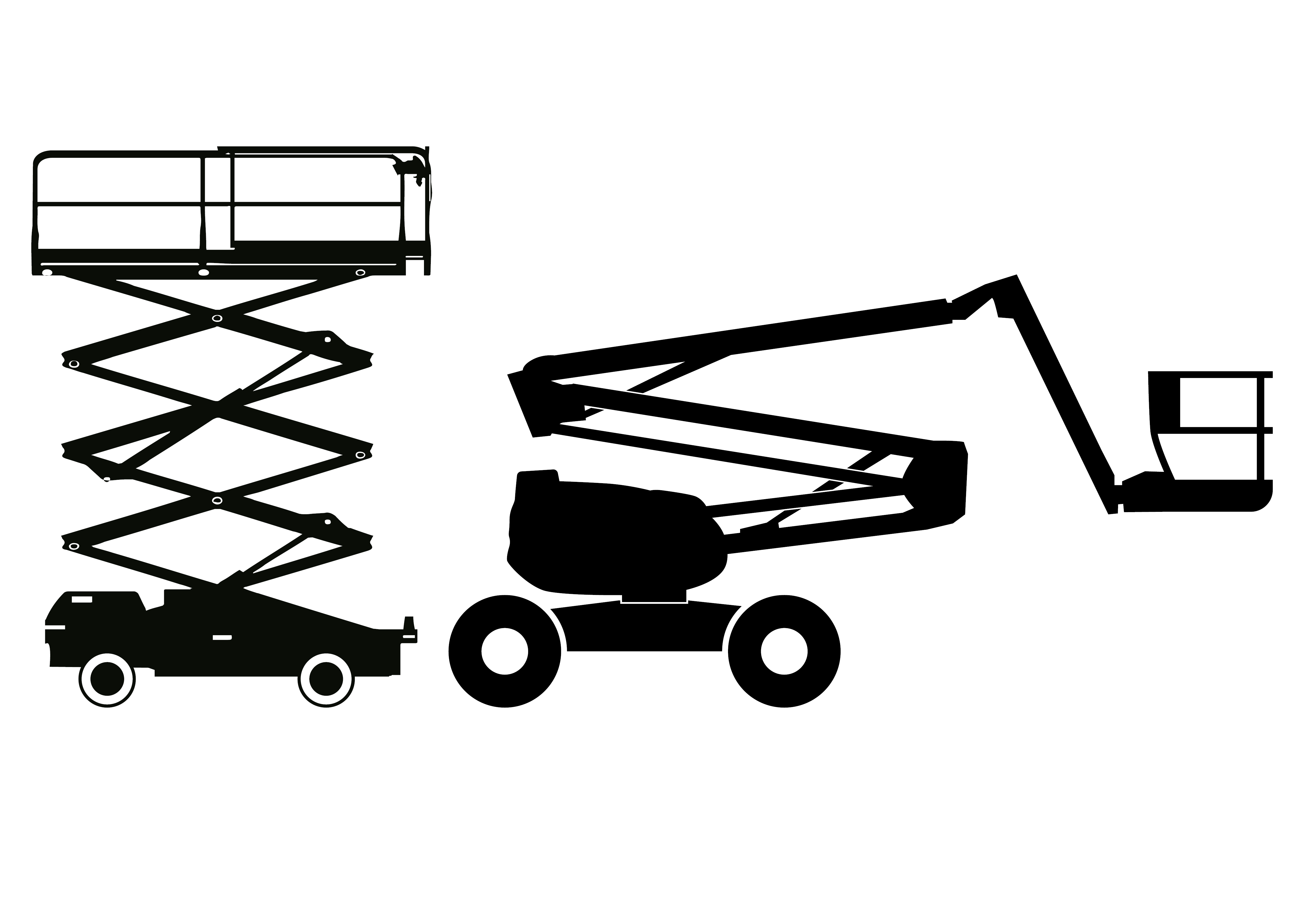
Scissor lifts and articulating boom lifts for precise assembly heights
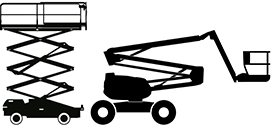
Electric scissor lifts with non-marking solid rubber tyres are the indispensable machine for maintenance and assembly work in production halls with coated industrial floors. Non-marking tyres leave neither abrasion particles nor grease marks on epoxy resin or polyurethane floors; in halls where cleanliness standards and the renter's liability for damage have contractual relevance, that is the basic prerequisite for machine use. Anyone who moves in with standard rubber tyres and leaves black tyre marks is liable for the cleaning – no trivial matter in coated industrial halls.
Electric operation also means: no exhaust emissions, no CO₂ in partially enclosed areas, no soot-particle proof required. In production halls with strict air-quality requirements, this rules out the class of diesel scissor lifts for indoor use. For outdoor operations on industrial sites, however – development areas, new-build outdoor zones, open-air assembly – diesel scissor lifts with a Euro Stage V engine and particulate-filter retrofit are the right machine. On request, Luibl provides proof of the emissions class of every diesel machine offered.
The working heights of the scissor lifts on offer range from 8 m to 34 m with a platform load capacity of up to 1,000 kg. Models with a platform width of under 1.20 m are designed for narrow halls and passages with standard sectional doors. For façade work and high-rise construction in outdoor areas, diesel articulating boom lifts with 4×4 all-wheel drive and an oscillating axle are available; working heights reach up to 48 m (articulating) or 57 m for telescopic boom lifts without an articulating head.
Electric articulating boom lifts with an angled boom are the specialist machine for pipework and cabling under hall ceilings. The articulating boom bridges obstacles such as crane rails, utility lines and beams without having to drive the entire platform under the obstacle. In automation systems and test benches, as are typical at automotive suppliers, this is the difference between a 4-hour and a 10-hour maintenance operation.
All mobile elevating work platforms in the Luibl rental fleet are regularly inspected in accordance with DGUV Principle 308-009; the UVV inspection certificate with a valid inspection date is handed over with the machine. In works environments where the plant safety officer checks the documentation before operation, this is not a formality but a prerequisite for the access permit.
Fixed and rotating telehandlers with high residual load capacities
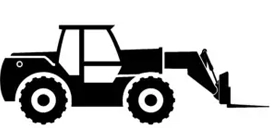
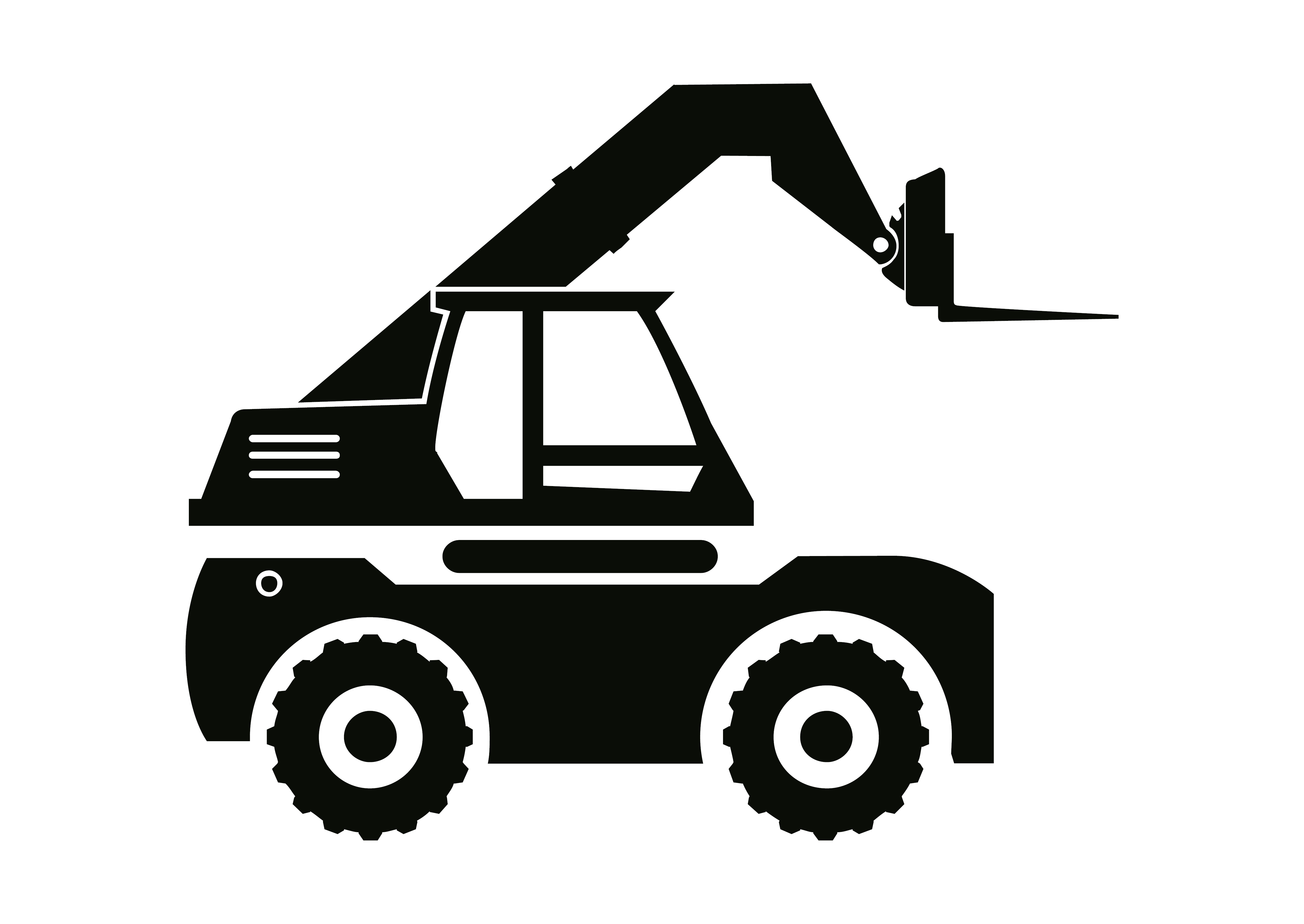
Fixed telehandlers with load capacities between 2.5 t and 4.5 t are the basic machine for material supply on construction sites in the Dingolfing industrial area. Merlo models such as the Merlo P40 (4 t at 13 m lifting height, fixed design) combine, with all-wheel steering and all-wheel drive, tight manoeuvrability on confined site plots with a stable load pick-up that requires no inclination corrections by the operator even at maximum lift. The fixed boom axle keeps the shift in the load's centre of gravity to a minimum – relevant when heavy production tools or plant components have to be guided into installation openings to the millimetre.
Rotating telehandlers go considerably further. The Magni RTH and the Manitou MRT rotate the boom through 360° and reach lifting heights of up to 39 m. The reach curve – that is, the dependence of the residual load capacity on the reach position – is the decisive knowledge for every operator before working with maximum reach and a heavy load. This is where the most common risk point in industrial use lies: at 20 m reach, the residual load capacity drops to a fraction of the zero-degree load capacity; anyone who does not know the load chart or does not consistently check it overloads the machine without visible warning signals – until the tip-over cut-out engages or the machine actually tips.
On request, Luibl provides the load charts of the roto models offered with the quote. For heavy-goods logistics on the works site – bringing in production tools, heavy press tools or plant frames – this advance calculation is not an optional step but part of operational safety planning.
For heavy-duty requirements of up to 20,000 kg, the Manitou MHT 10200 is available on request. For plant conversions or machine relocations with unit weights in this range, it is the economical alternative to using a mobile crane.
For the operation of telehandlers in accordance with DGUV Principle 308-009, various qualification levels are distinguished: level 1a (fixed telehandlers without a rotation function), level 1b (telehandlers with extended telescopic reach) and level 2 (roto telehandlers with a 360° boom). Each level requires its own documented training; an operator with a level 1a qualification may not operate a roto telehandler. In multi-shift operation – the standard mode in manufacturing industry – this qualification must be documented on a per-shift basis for every driver deployed.
Forklifts and rough-terrain heavy-duty forklifts for works logistics
Electric counterbalance forklifts with a load capacity of 1.5 t to 3.5 t are the first choice for emission-free use in production halls, storage areas and test fields. Battery charging must be planned in multi-shift operation – an aspect that Luibl addresses on request in the quotation discussion: how many shifts is the machine planned for, and can an intermediate charge be organised? The alternative for very long operating times is a gas-powered counterbalance forklift with a quick refuelling time.
Heavy-duty forklifts with up to 16 t load capacity cover intralogistics with heavy press tools, machine units and steel frames. In automotive-supplier businesses and production plants where individual components weigh several tonnes, this equipment class is the bottleneck when it is missing. The inspection obligation for industrial trucks arises from DGUV Regulation 68; the inspection protocol and sticker are handed over with the machine.
Optimised rental solutions for the industrial and commercial areas in Dingolfing
Dingolfing's economic structure is highly specialised and puts the rental process under time pressure that does not exist in other regions.
Plant maintenance in multi-shift operation: Automation service providers such as SAR Elektronic and comparable technology companies in the Dingolfing area work in maintenance windows that follow the production cycle of the automotive industry. A 4-hour maintenance window in the night shift means: the machine must be in place before the window begins. The instruction protocol must be available before the first use. After the window, the machine must be removed from the hall access area before production ramps up again. On request, Luibl coordinates delivery windows for the early morning hours or night deliveries; the in-house fleet provides this flexibility without third-party-haulier coordination.
Food-processing companies: In the environment of companies such as Develey, floor-protection and emissions requirements apply that are analogous to those in the automotive industry: non-marking tyres, no diesel emissions near production, a clean machine at handover. The non-marking tyre is not an optional feature here but a supplier requirement anchored in the supplier code of many food companies.
Hall construction and development work: New factory halls, logistics buildings and technical facilities are regularly built on the industrial plots around Dingolfing. All-wheel articulating boom lifts and fixed telehandlers supply these construction sites on unpaved ground. For development work in the Isar lowlands with seasonally high groundwater, tracked work platforms with low ground pressure offer the most stable solution.
Combined offers for large projects: Anyone who needs several machines at the same time for a works shutdown or a production interruption – work platforms for hall work, telehandlers for material supply, heavy-duty forklifts for plant relocations – receives a consolidated combined offer from Luibl with one delivery coordination, one instruction appointment and one joint rental invoice.
Legal requirements, UVV inspections and machine breakage insurance in rental operation
In the Dingolfing industrial environment, legal protection in machine rental carries more weight than on a general construction site. Group suppliers and service providers on works sites are often subject to stricter contractual obligations that go beyond the statutory minimum requirements.
BetrSichV and inspection obligation: The Industrial Safety Ordinance obliges the operator to inspect rented work equipment before every commissioning. DGUV Regulation 1 (principles of prevention) specifies the daily inspection obligation. Luibl hands over every machine with a valid DGUV inspection sticker and a complete inspection protocol. In works environments where the safety officer checks the documentation before hall admission, the protocol is not an appendix but the key to the works site.
DGUV Regulation 38 in assembly operations: For the operation of machines in structural, civil and assembly construction, the safety requirements of DGUV Regulation 38 apply. In the industrial environment, works-specific operating instructions are added, which may define their own protection classes and cordoning-off radii. These take precedence over DGUV standard requirements; inform yourself before the first use with the safety officer responsible for the respective works.
Qualification levels in accordance with DGUV Principle 308-009: For telehandlers, the principle distinguishes three levels: level 1a (fixed machines), level 1b (extended telescopic reach), level 2 (roto, 360° boom). In multi-shift operation, the person responsible for the shift must have documented that the operators deployed hold the correct level. On request, Luibl coordinates instruction by its own technicians at machine handover – with a written instruction protocol for each instructed person.
ISO 18878 for mobile elevating work platforms: The international standard defines the minimum content of an operator qualification for mobile elevating work platforms. The IPAF PAL Card is the most widely used certified proof in practice. In works environments, some operators require this proof as an access prerequisite for platforms on the site.
Machine breakage insurance: Damage caused by operator error, overloading or improper use is charged to the renter. Damage to assistance systems – overload sensor, stability cut-out, inclination measurement – falls into this category when the trigger was operating error. Whether Luibl offers optional machine breakage cover with a defined excess is part of the quotation terms and must be fixed in writing before concluding the contract. Day-precise billing of the rental period is standard; multi-shift operation or weekend operations must be expressly agreed in the rental contract so that no additional charge arises.
Machine downtime: Electronic or hydraulic failures without operator fault are handled via the technician-request rental service at luibl.eu/en/technician-request/. In JIT-sensitive works environments, where downtime costs per hour are considerable, written arrangement in the rental contract is recommended: who bears the follow-on costs in the event of a manufacturer-side material defect, and within what time window does Luibl respond?
Enquire now – construction machinery rental for Dingolfing and the Dingolfing-Landau district
Do you need the load chart of a roto telehandler, the emissions-class proof for a diesel machine or the surface pressure of a scissor lift for your hall floor? Luibl provides technical data sheets on request and coordinates delivery windows according to your shift and maintenance schedules.
Telephone expert advice for the Dingolfing area: +49 (0) 851 756868-0 (Mon–Fri, 08:00–17:00)