Solar obligation 2026: why safe height-access technology is now decisive for PV installation
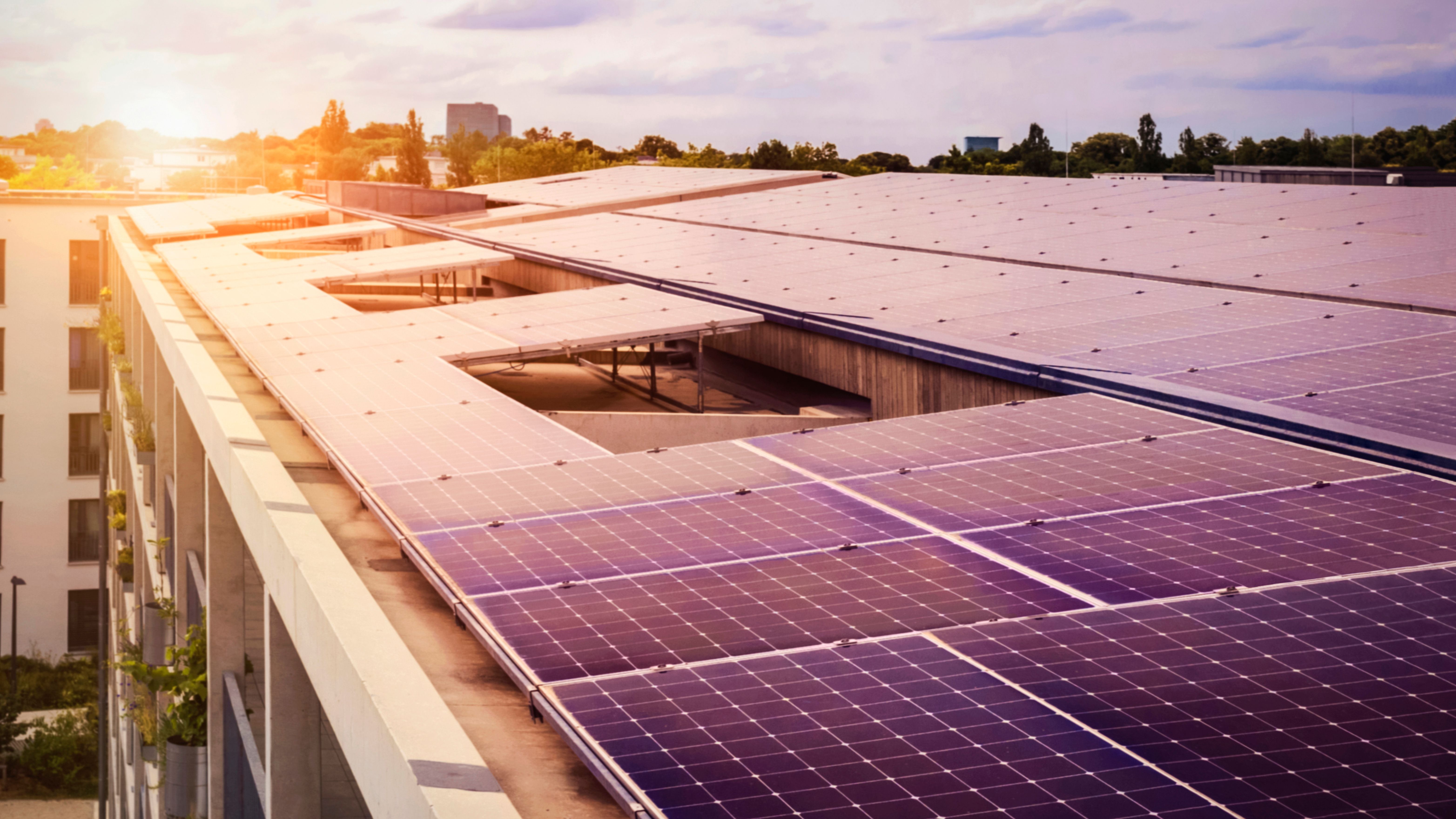
The 2026 solar obligation is being extended to existing buildings – bringing with it a wave of roof installations. Anyone who installs photovoltaic systems professionally and in compliance with the law cannot avoid one decisive question: which height-access technology is the right one – and what does the legislator prescribe?
Why the 2026 solar obligation is driving demand for access technology
From 2026, the following applies in North Rhine-Westphalia and other federal states: anyone who completely re-covers their roof must simultaneously install a photovoltaic system. Minimum size in NRW: 30 percent of the suitable roof area, sufficient from 3 kWp for single- and two-family houses. What previously mainly affected new builds now also extends to existing stock.
The result: solar installers, roofers and trade businesses are recording a sharply rising order situation. This also increases the need for professional height-access technology – because every roof installation begins with a central safety question: how do I get safely onto the roof?
Risks in PV installation on the roof
Installing solar systems on pitched roofs is one of the most accident-prone activities in the trades. Falling is the greatest risk – and at the same time the most frequently underestimated. The employers' liability insurance associations for wood and metal (BGHM) and for the construction industry (BG BAU) have therefore clearly regulated the requirements:
-
Collective protection takes precedence over individual protection (PPE against falls)
-
Leaning ladders are generally prohibited during installation – an exception applies only as a traffic route up to a max. 5 m height difference and exclusively for short-term activities
-
A risk assessment is mandatory before work begins
-
Temporary edge-protection systems in accordance with DIN EN 13374 (classes A, B, C) count as a recognised protective measure
In 2024, the BG BAU published its own guideline: „Scaffolding for the installation of PV systems“ – a clear signal that the industry can no longer ignore professional access solutions.
Height-access technology compared: which solution for which site?
Not every construction site is the same. The choice of the right access technology depends on the roof type, ground, project size and time pressure.
Scaffolding – the classic for pitched roofs
For pitched roofs from approx. 20° inclination, scaffolding is the safest and most frequently prescribed solution. It offers a stable workplace along the entire length of the roof, enables the safe setting down of modules and tools and at the same time protects the area below. Flexibly adaptable systems today also allow quick erection for complex roof geometries.
Advantages: maximum safety, large working area, material storage possible, suitable for all roof sizes.
Disadvantages: erection time 2–8 hours, rental costs approx. €10–20 per m², space requirement on the property.
Work platforms and lifting platforms – flexible and fast
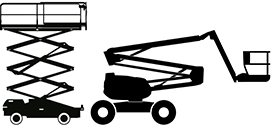
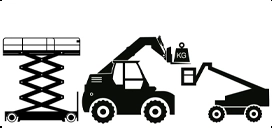
For flat roofs, low buildings or individual points, the work platform is often the more efficient alternative. Electric articulating boom lifts enable locally emission-free work directly at the roof, without complex scaffolding erection. Especially for maintenance, cleaning or the installation of individual modules, truck-mounted work platforms and trailer platforms are time-saving solutions.
Advantages: no erection, ready for use immediately, flexibly positionable, ideal for individual points.
Disadvantages: limited reach depending on the model, rental costs higher than scaffolding, requires load-bearing ground.
Spider lifts for difficult terrain
When the ground is uneven or the vehicle cannot reach the building directly, spider lifts come into use. They offer maximum off-road capability while at the same time exerting low ground pressure – ideal for existing properties with restricted access routes.
Advantages: off-road capable, low ground pressure, no paved ground required.
Disadvantages: higher rental costs, slower in movement than wheel-based platforms.
PPE against falls – when it is permitted
Personal protective equipment against falls (safety harness and anchor point) is no substitute for collective protection, but can be used additionally in justified exceptional cases – for example when scaffolding is technically not feasible due to the roof geometry. In such cases, suitable anchor points must be available on site or retrofitted.
Renting or buying scaffolding – what is worthwhile for solar installers?
For solar installers who regularly install PV systems, the question arises: rent or buy scaffolding?
Renting is worthwhile for businesses with changing projects and different roof sizes. The costs are calculable; storage and maintenance are eliminated. Rental prices start from approx. €10 per m² of scaffolding area.
Buying is worthwhile for businesses with a high order volume and similar projects. An own scaffolding system pays for itself after approx. 15–20 assignments. In return, costs arise for storage, transport and regular inspection obligations under DGUV.
Legal requirements: what solar installers and roofers need to know
The most important sets of rules:
-
BGHM Arbeitsschutz-Kompakt 069 – installation of solar and photovoltaic systems on roofs
-
BG BAU guideline 2024 – scaffolding for the installation of PV systems
-
DIN EN 13374 – temporary edge-protection systems, classes A to C
-
DGUV Regel 101-004 – scaffolding work
Key points: access to the roof must be designed to be safe – preferably through the building (stairwell, roof exit). Where this is not possible, stair towers, hoists or stair ascents in the scaffolding are prescribed. The risk assessment documents the chosen solution and is decisive in the event of a dispute.
Costs of height-access technology at a glance
| Solution | Rental costs (approx.) | Erection time | Suitable for |
|---|---|---|---|
| Façade scaffolding | €10–20 / m² | 2–8 hrs | Pitched roof, large systems |
| Trailer platform | €100–250 / day | immediate | Flat roof, individual points |
| Truck-mounted work platform | €250–600 / day | 15 min | Fast individual assignments |
| Spider lift | €300–700 / day | 15 min | Difficult terrain |
The total costs of the access technology usually amount to 5–15% of the installation costs of a PV system – a manageable investment in safety and efficiency.
Conclusion: professional access technology saves time and protects lives
The 2026 solar obligation is not a bureaucratic detail – it noticeably changes the order volume in the trades. Anyone who wants to remain competitive as a solar installer or roofer needs reliable access solutions: safe, efficient and legally compliant.
Whether scaffolding, lifting platform, work platform or spider lift – the right height-access technology is not a cost factor but a competitive advantage.
Get advice now: our experts help you find the right access solution for your next PV construction site.
FAQ – frequently asked questions about height-access technology for PV installation
Is scaffolding mandatory for photovoltaic installation?
Not legally prescribed as the only solution, but the safest option for pitched roofs. The BGHM and BG BAU require a risk assessment and suitable collective protection – in practice this almost always leads to scaffolding on pitched roofs.
What does scaffolding for a PV system cost?
The rental costs are approx. €10–20 per m² of scaffolding area, plus erection and dismantling. For an average single-family house, total costs of €500–2,000 add up, depending on roof size and rental duration.
Can a solar system be installed without scaffolding?
Yes, if suitable alternatives are used: work platform, rope-securing system or spider lift. A documented risk assessment is always a prerequisite.
What is different with flat roofs?
On flat roofs, the risk of falling is less pronounced, but edge protection at the roof edge remains mandatory. Work platforms and scissor lifts are the preferred access solution here – no scaffolding needed.
Who bears responsibility for access safety on the construction site?
The executing company is responsible for the risk assessment and the implementation of suitable protective measures. In the case of subcontracting, the coordination obligation lies with the client (client's duty under the Construction Site Ordinance, BaustellV).
What applies from 2026 with the solar obligation?
In NRW and other federal states, from 2026 existing buildings must, upon complete roof renewal, install a PV system with at least 30% of the suitable roof area. Exceptions apply in the case of technical or economic unreasonableness.
Which certificates do height workers need for PV installation?
For PPE use: training in accordance with DGUV Regel 112-198/199. For work platforms: operator proof in accordance with DGUV Grundsatz 308-008. Industrial climbers require FISAT Level 1 or IRATA Level 1 as a minimum qualification.