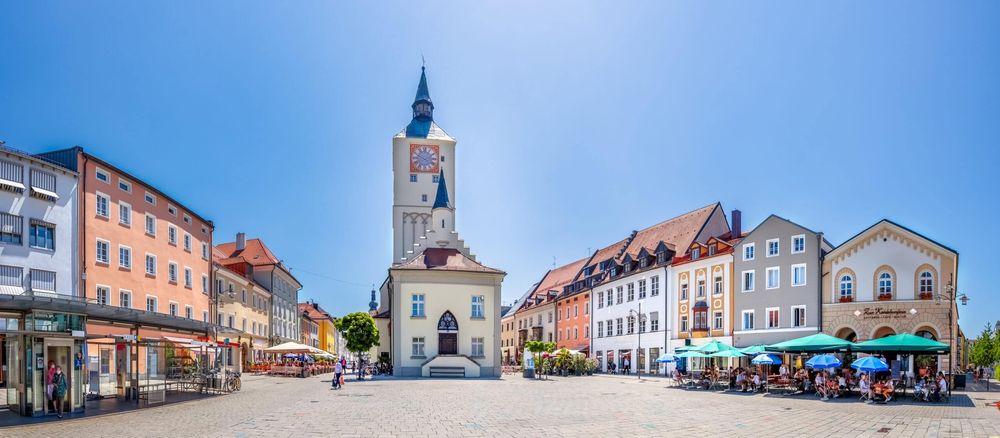
Rent work platforms and forklifts in Deggendorf at a reasonable price
Deggendorf is one of the best-connected logistics locations in Lower Bavaria: the A3/A92 motorway interchange, the Danube harbour, established industrial estates and a dense network of suppliers around the automotive plants in Dingolfing and Landshut. Anyone looking to rent construction machinery here is not thinking in terms of mountain slopes and forest floors, but of hall load capacities, low-loader logistics across the motorway interchange and residual load capacities for heavy-load handling on the Danube quay.
Luibl delivers work platforms, telehandlers, forklifts and construction machinery from a workshop-tested rental fleet with its own low-loader fleet directly to your site in the district of Deggendorf. Delivery is made from Passau — with fixed route planning via the A3, without dependence on third-party hauliers. Transport conditions are calculated individually on the basis of your specific delivery address and the equipment required; flat-rate per-kilometre prices are no substitute for a binding quotation.
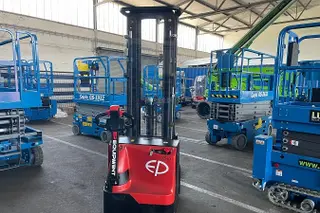
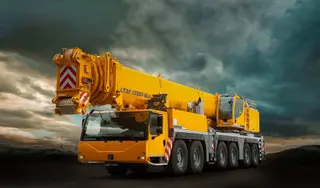
Work platforms, telehandlers and forklifts for Deggendorf
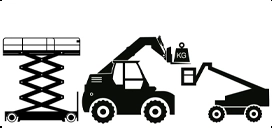
The rental range for the Deggendorf area is divided into three equipment classes designed for the operations typical here: hall installations in logistics centres, structural and facade work on industrial sites, and heavy-load handling and material supply on large construction sites.
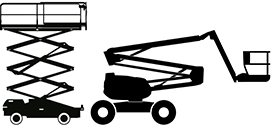
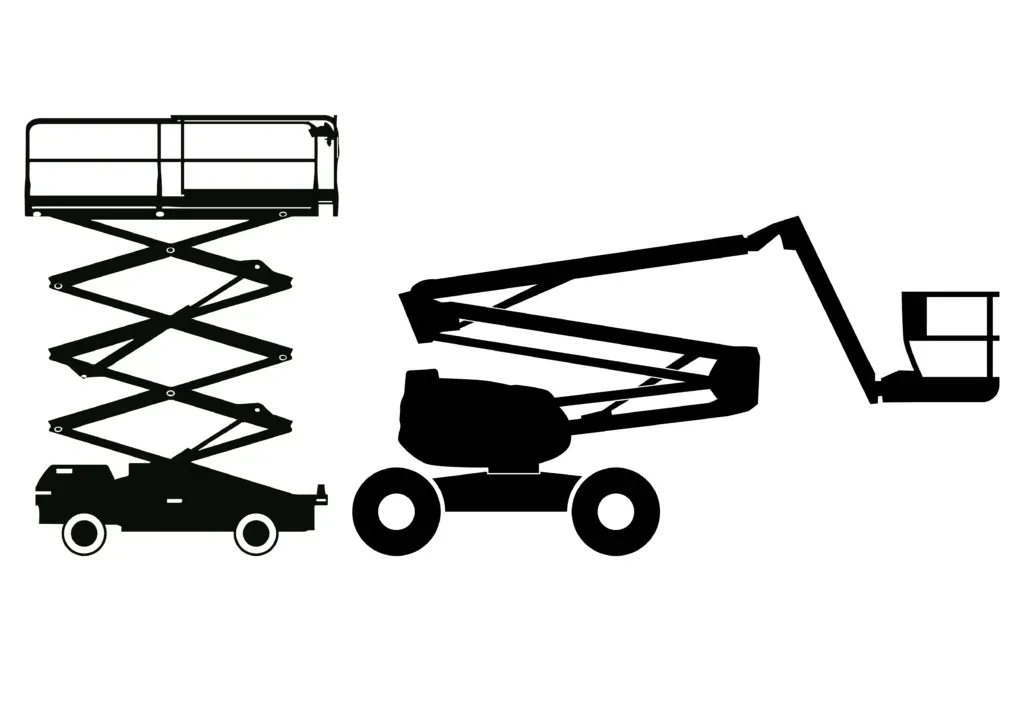
Scissor lifts and articulating telescopic boom lifts for precise installation heights
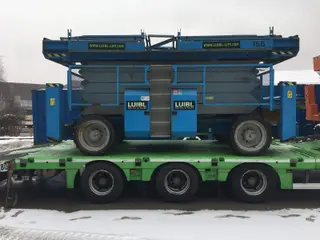
Electric scissor lifts with light-coloured non-marking solid rubber tyres are the standard equipment for work in logistics and production halls. Technically, non-marking means: no soot or abrasion particles in the rubber compound that leave visible marks on coated industrial floors – epoxy resin, polyurethane or concrete sealant. In the port of Deggendorf and in the commercial areas on the outskirts of town, these machines operate locally emission-free, quietly and with platform widths under 1.20 m, which are sufficient for common sectional doors and hall passages. Working heights range between 8 m and 16 m for the compact hall segment; larger models reach up to 34 m working height with a platform load capacity of up to 1,000 kg.
The ground pressure of an electric scissor lift is significantly lower than that of a forklift of comparable size – a relevant parameter for coated hall or quay floors with limited bearing load. Ask for the specific surface pressure of the desired model when making your enquiry; Luibl provides technical data sheets with the exact figures on request.
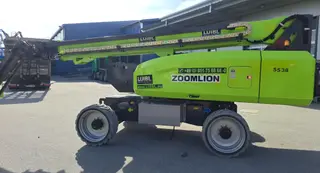
Diesel articulating telescopic boom lifts with 4×4 all-wheel drive and an oscillating axle are the machine for outdoor operations on construction sites with unpaved ground. On the industrial sites around Deggendorf – development areas, new-build fields, open ground at the harbour – they offer climbing ability for uneven construction ground and working heights of up to 48 m (articulating boom lift) or up to 57 m for telescopic boom lifts without an articulating joint. The angled boom reaches working positions over obstacles without having to position the machine exactly beneath the point of use – relevant in confined conditions on dense industrial plots.
All aerial work platforms in Luibl's rental fleet are tested in accordance with BetrSichV and DGUV Rule 100-500; the valid UVV test certificate is part of the standard machine handover.
Rigid and rotating telehandlers with high load capacity
In the Deggendorf area, fixed telehandlers are the preferred machine for material supply on structural and industrial construction sites. Merlo models such as the Merlo P40 (rigid design, 4 t load capacity at up to 13 m lifting height) deliver precise control on both paved operations and mixed construction ground thanks to all-wheel drive and all-wheel steering. The rigid body keeps the platform stable even at maximum reach, which is decisive for horizontal material feeding into ceiling structures and facade installations.
Rotating telehandlers raise the scope of application to another level: the Magni RTH and the Manitou MRT rotate their boom through 360° and thus combine the flexibility of a loader with the functions of a small crane. With lifting heights of up to 39 m and modular attachments – work basket, cable winch with load hook, fly jib, concrete bucket – they replace a dedicated crane on sites with limited set-up space. The Merlo Roto 45.21, for example, reaches 21 m lifting height with 4.5 t load capacity at zero-degree reach; the residual load capacity at maximum lateral reach decreases in accordance with the load chart, which must be consulted before starting work.
Load charts are not a formality: a rotating telehandler loaded at maximum reach with a payload close to the tipping-load limit builds up the tipping moment abruptly – without any visible warning for the operator. Manufacturers such as Manitou, Merlo and Magni provide machine-specific load charts; Luibl issues these with the quotation on request so that you can calculate the residual load capacity for the specific boom length and inclination of your construction site in advance.
The Manitou MHT 10200 heavy-load telehandler carries up to 20,000 kg at lifting heights of over 10 m – a directly available rental option for heavy steel components, precast concrete elements or machine units on the Danube quay.
Qualification requirements for operators are governed by DGUV Principle 308-008; on request, Luibl coordinates a documented machine briefing at handover.
Forklifts and all-terrain heavy-load forklifts for goods handling
Electric counterbalance forklifts with 1.5 t to 3.5 t load capacity operate locally emission-free in logistics centres, production halls and covered handling facilities. In the port of Deggendorf and in the connected warehouses, this is the preferred drive type: no exhaust fumes, no noise from a diesel engine, no fire safety requirements for fuel bunkers. Gas-powered counterbalance forklifts offer the same flexibility for indoor and outdoor operation when required, without the range limitation of battery packs.
Heavy-load forklifts with up to 16 t load capacity round off the requirement for industrial heavy-load handling – loading machine units, steel structures or timber elements on the company premises. All-terrain forklifts with rugged tyres and high ground clearance complement the portfolio for mixed operations on paved and unpaved terrain.
The inspection obligation for industrial trucks follows from DGUV Regulation 68; current inspection records are handed over with the machine.
Realising logistics and construction projects in the Deggendorf area efficiently
Deggendorf combines three types of economy relevant to machine rental: industrial production and automotive suppliers, harbour logistics on the Danube quay and classic structural construction in a growing medium-sized town. Each of these types places different demands on the equipment.
Hall and logistics installation: In the region's logistics centres and large warehouses – for example around the harbour and along the A3/A92 axis towards Plattling – maintenance and installation work arises that requires floor-friendly equipment. Sprinkler systems, storage systems, crane runways and lighting infrastructure in halls with sensitive floors are serviced with electric scissor lifts fitted with non-marking tyres. The disadvantage compared with alternative means of access such as ladders or scaffolding: there is none. The platform is stable, height-adjustable and carries two people with tools. No one needs to erect scaffolding, no one has to climb down from the roof truss.
Industrial structural work and facade installation: On new-build sites in the district's industrial parks, diesel articulating telescopic boom lifts work on unpaved ground under conditions that would overwhelm a wheeled work platform. All-wheel drive, an oscillating axle and a large clearance between the underside and the ground enable safe driving without leaving marks in fresh soil and without sinking into soft ground.
Heavy-load handling and harbour logistics: At the Deggendorf Danube harbour, requirements regularly arise that make a mobile crane too expensive and a standard forklift too weak: units of up to 10 t that have to be placed precisely on transport platforms; steel frames that are lifted 8 m into the air and guided into installation openings to the millimetre. Rotating telehandlers with a cable winch and load hook are the economical alternative to a truck crane for this application – one machine, one rig, one driver.
On-time delivery via the A3: The Deggendorf motorway interchange is one of the busiest axes in the triangle of Passau–Regensburg–Landshut. Luibl plans delivery times taking into account the risk of congestion on this route and, on request, coordinates delivery windows for the early morning hours or low-traffic intervals. Its own low-loader fleet provides the flexibility to shift time windows without coordinating with third-party hauliers if site access or the handover situation on site changes.
Legal protection, safety inspections and machine breakage insurance
Renting construction machinery is not a mere purchase transaction. On taking over the equipment, the renter assumes the operator's obligations – and thus a liability situation that carries considerable financial risks for projects in an industrial and logistics environment.
Operator obligations under BetrSichV: The Industrial Safety Regulation (Betriebssicherheitsverordnung) obliges the operator to use rented work equipment only in perfect condition. In concrete terms, this means: a daily visual and functional inspection before commissioning, documentation of any defects identified and immediate shutdown in the event of safety-relevant defects. DGUV Regulation 1 (principles of prevention) specifies this obligation for ongoing operation. Luibl hands over every machine with a current DGUV test badge and complete inspection documentation; the renter is thereafter responsible for proper operation.
DGUV Regulation 38 in construction and installation work: The safety requirements of DGUV Regulation 38 (construction work) apply to the operation of machinery in structural, civil and installation construction. Among other things, this governs the requirements for a secured set-up surface, the obligation to cordon off and mark the area around the equipment and the documentation obligations at machine handover. In industrial halls, the operator's own works operating instructions additionally apply, and these may take precedence over general DGUV requirements.
Briefing record at handover: A documented machine briefing in accordance with ISO 18878 (for aerial work platforms) and DGUV Principle 308-009 (for telehandlers) is not only a protective measure but also evidence that documents the question of operator qualification in the event of damage. On request, Luibl coordinates the briefing by its own technicians directly at equipment handover on the construction site – with a written briefing record.
Machine breakage insurance and excess: Damage to rented machines caused by operator error, improper use or overloading is borne by the renter. Whether Luibl offers optional machine breakage insurance with a defined excess is part of the offer conditions and must be clarified in writing before the contract is concluded. In addition, check whether your business liability or construction insurance covers rented third-party machines in the event of damage. Particular risk situations – unguarded night-time construction sites, use in secured harbour areas with access restrictions – must be agreed separately with the insurer.
What applies in the event of a technical defect without operator fault: Material defects on the equipment that are not attributable to operator or application errors are rectified through Luibl customer service. The Technician Request Rental service at luibl.eu/monteuranforderung-miete/ is the direct channel for immediate responses on site. Whether downtime costs are reimbursed in the event of a manufacturer-side material defect is to be regulated in the rental contract – clarify this actively during the quotation discussion.
Before you enquire, it is worth looking at the designs: at Rent a lifting platform you will find all platform types from the scissor lift to the truck-mounted platform with their strengths, typical applications and operator duties.
Frequently Asked Questions About Construction Equipment Rental in Deggendorf

Is a short-term extension of the hire period possible in the event of construction delays?
Can several machines be hired in combination for large projects?
What qualifications does personnel need to operate a rotating telehandler?
How is the handover and instruction for construction machinery documented on site?
How much do transport costs for hire machinery amount to in the Deggendorf area?
Enquire now – construction machinery rental for Deggendorf and the district
Do you need the load chart of a rotating telehandler or the exact surface pressure of a scissor lift for your coated hall floor? Luibl provides technical data sheets on request and clarifies the transport date and conditions in a single reply.
Telephone expert advice for the district of Deggendorf: +49 (0) 851 756868-0 (Mon–Fri, 08:00–17:00)