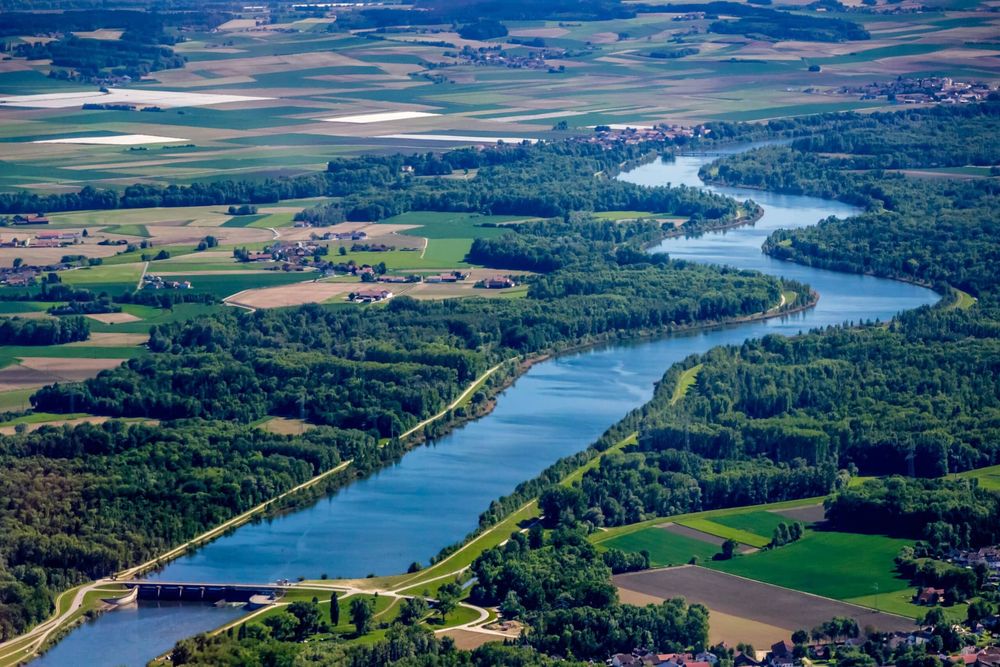
Rent construction machinery in Plattling – your rental fleet for height access & heavy-load logistics
Plattling is more than just a district town in the Deggendorf district. The town is a railway hub for four lines – Regensburg–Passau, Munich–Landshut, the Bavarian Forest Railway and the Isar Line – a base for the food-processing industry around the Südzucker site, and the starting point for one of the densest industrial-estate structures in the Lower Bavarian Forest. For anyone hiring construction machinery in this region, that means delivery dates have to follow shift changes, hall-gate clearances and the specific ground requirements of the processing industry – not just the driving time.
Luibl supplies aerial work platforms, telehandlers, forklifts and construction machinery from a workshop-tested fleet with its own low-loader fleet. The Passau–Plattling connection runs via the A92 motorway with direct access to the industrial estates; there is no third-party haulier step that makes time windows impossible to control. Transport terms are calculated on a binding basis according to your specific delivery address and scheduling requirements.
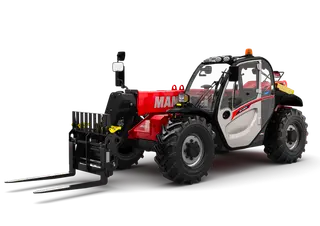
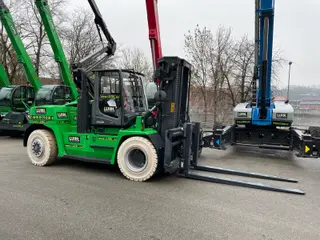
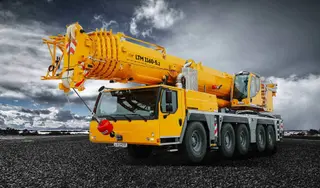
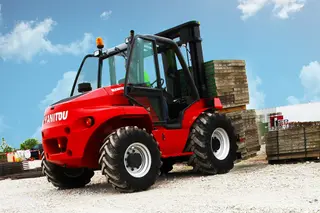
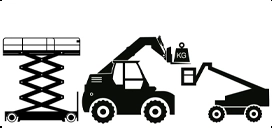
Aerial work platforms, telehandlers and forklifts for Plattling
The equipment requirements in the Plattling area split between two clearly different worlds of use: on the one hand, manufacturing and the food industry with very specific floor-protection and emission requirements, and on the other, construction projects and infrastructure work on open sites and along the transport axes.
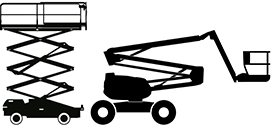
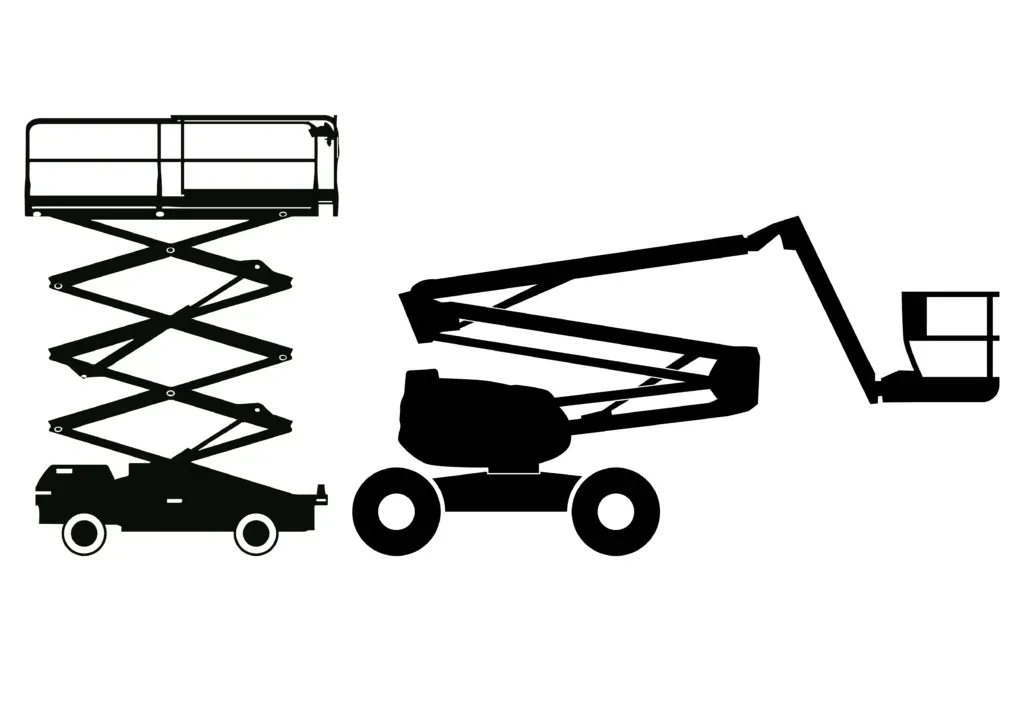
Scissor lifts and articulating boom lifts for precise work at height
Electric scissor lifts with non-marking solid rubber tyres are the only permissible type of work platform in production and logistics halls with sensitive floors. This applies not only to visually delicate epoxy or polyurethane floors, but also to food-related production areas where tyre abrasion poses a contamination risk. In technical terms, non-marking means: no soot and no migratory plasticisers in the rubber compound, and no abrasion under driving load. At the Südzucker site and in comparable food-processing operations in the Nord industrial estate, this tyre type is mandatory, not a recommendation.
In addition, areas with dust accelerants (e.g. grain or sugar dust in elevated concentrations) require ATEX zoning under the Industrial Safety Regulation (BetrSichV). Whether a standard electric work platform is approved for these areas depends on the explosion-protection classification of the zone. On request, Luibl will clarify which machines in the fleet hold ATEX approval; for unclassified zones, the non-marking version is sufficient. Check in advance with the plant operator which zone category your working area falls into.
The working heights of electric scissor lifts in the rental range extend from 8 m (compact models for low halls) to 34 m, with a platform capacity of up to 1,000 kg. Models with a platform width below 1.20 m pass through standard internal hall doors and allow positioning directly at the working point, without scaffolding or hall closures.
Diesel articulating boom lifts with 4×4 all-wheel drive, an oscillating axle and high climbing ability are the outdoor equipment for construction sites on unpaved ground. They work on the development areas of the Nord industrial estate, on brownfield sites along the Isar lowlands and on construction sites where standard wheeled work platforms sink in during rainfall. With working heights of up to 48 m (articulated) or up to 57 m (telescopic without articulation), they reach façades, roof structures and high-bay warehouses from the outside as well.
All aerial work platforms in the Luibl fleet are regularly inspected in accordance with DGUV Principle 308-009; the current accident-prevention (UVV) inspection certificate is handed over with the machine.
Fixed and rotating telehandlers with high load capacity
In the Nord industrial estate and at the Plattling rail freight site, requirements regularly arise that overwhelm a standard forklift: precast concrete elements that weigh several tonnes when unloaded from railway wagons and must be set in a specific angular alignment; high-bay racking in new-build halls whose ceiling beams are installed at heights above 15 m; machine foundations that need to be positioned to the millimetre on a production floor.
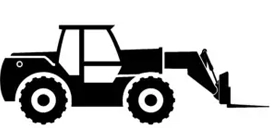
Fixed telehandlers with load capacities from 2.5 t to 4.5 t and lifting heights up to 18 m are the basic equipment for material supply and height logistics on construction sites with clear working points. With all-wheel drive and all-wheel steering, they move safely even on waterlogged construction ground; with interchangeable attachments – pallet forks, concrete skip, earthmoving bucket – they adapt to the course of the project.
Rotating telehandlers go considerably further: the 360° boom enables lifting and slewing without repositioning the machine. Particularly at the Plattling railway hub, where delivery vehicles arrive from several directions and manoeuvring space is tight, the ability to position the machine once and then work in several directions with the boom is a concrete time saving. With lifting heights up to 39 m and attachments such as a rope winch (as a crane), work basket (as a lifting platform) or fly jib, a Roto telehandler replaces a separate mobile crane for medium load moments.
Load charts and residual capacity: With rotating telehandlers, the tipping moment builds up abruptly at maximum outreach. The load chart specifies the permissible residual capacity for every combination of outreach and inclination. Anyone who exceeds this value – even briefly when accelerating – risks a tipping accident. On request, Luibl provides the load charts of the offered models with the quotation. Before first use, check which payload is permissible at your specific outreach.
The Manitou MHT 10200 as a heavy-duty telehandler carries up to 20,000 kg – an option available on request for heavy units, steel components or bulk-material containers at the freight-handling site.
Forklifts and rough-terrain heavy-duty forklifts for site logistics
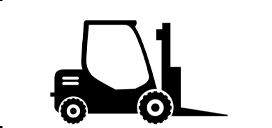
Electric counterbalance forklifts with 1.5 t to 3.5 t load capacity work locally emission-free in production halls, cold stores and covered loading areas. In food-related environments, this eliminates the risk of exhaust residues on product surfaces and the need for additional ventilation. Gas-powered counterbalance forklifts offer flexibility for mixed indoor and outdoor operation, where battery packs would be drained by long shifts.
Heavy-duty forklifts up to 16 t load capacity are the high-performance solution for freight handling in the rail area and for operation in production halls with heavy stored goods. The inspection obligation for industrial trucks arises from DGUV Regulation 68; the documented inspection reports are handed over with the machine.
Realising industrial and infrastructure projects in the Plattling area efficiently
Plattling's economic structure combines several requirement profiles that set different priorities for machine selection.
Food and processing industry: The Südzucker site in Plattling is one of the best-known industrial locations in Lower Bavaria. In food-processing plants, strict requirements apply to maintenance and retrofitting work: floor protection (non-marking tyres), locally emission-free operation in production areas, documented proof of the last machine cleaning and – depending on the area classification – ATEX suitability of the equipment used. Clarify these requirements in the quotation discussion with Luibl; technical data sheets on the explosion-protection classification of certain machines are available on request.
Rail freight handling and combined logistics: Plattling is the hub where four railway lines meet. In the freight area, this means regular transhipment work between rail and road. For medium loads, rotating telehandlers with a rope winch replace the use of a mobile crane: they lift, slew and set goods without crane approval and with a fraction of the setup effort. What matters is the operator's flawless knowledge of the load chart before the first crane-replacement job.
Hall construction and development projects: New halls, logistics centres and ancillary buildings are regularly built in the industrial estates around Plattling. All-wheel scissor lifts and articulating boom lifts supply fitters on roof structures and façades without depending on paved access roads. For opencast work on Isar-lowland sites with a high groundwater level and soft ground, spider lifts with low ground pressure offer the most stable solution.
Just-in-time delivery windows: Plattling works in a three-shift system; factory gates open at the shift change and close afterwards. A low-loader delivery that misses the time window incurs demurrage costs. On request, Luibl coordinates delivery windows for the early morning or for low-congestion time intervals on the A92 – its own fleet makes this coordination possible without third-party haulier interfaces.
Legal protection, safety inspections and machinery breakdown insurance
Anyone who hires a construction machine assumes the operator's obligations upon handover. In industrial environments – where third parties (plant operators, site tenants, subcontractors) are active at the same time – the web of liability becomes more complex.
BetrSichV and the daily inspection obligation: The Industrial Safety Regulation (BetrSichV) requires the operator to inspect hired work equipment for damage and operational readiness before each start-up. Any defects identified must be reported to Luibl immediately and the machine taken out of service until the matter is resolved. DGUV Regulation 1 (Principles of Prevention) specifies this obligation for ongoing operation. Luibl hands over every machine with a valid DGUV inspection sticker and current inspection report.
DGUV Regulation 38 in construction and assembly use: For the operation of machines in structural, civil and assembly work, DGUV Regulation 38 (Construction Work) governs the set-up ground, cordoning obligations and handover documentation. The plant operator's own works operating instructions also apply and may define additional requirements – find out before use from the site manager of the respective site.
Instruction record: A documented machine instruction in accordance with ISO 18878 (aerial work platforms) and DGUV Principle 308-009 (telehandlers) demonstrates operator qualification and reduces personal liability risk in the event of damage. On request, Luibl coordinates instruction by its own technician at the machine handover on site – with a written instruction record. This document is the decisive proof in the event of a claim.
Machinery breakdown insurance: Damage caused by operator error, overloading or improper use is at the hirer's expense. Whether Luibl offers optional machinery breakdown insurance with an excess is part of the offer conditions and must be set out in writing before the contract is concluded. Also check whether your business liability or construction-works insurance covers hired third-party machines in use — particularly for night construction sites and unguarded site sections.
Machine downtime and immediate service: In the event of electronic or hydraulic failures without operator fault, the technician request rental service at luibl.eu/en/technician-request/ is the direct route for an immediate response. The demarcation of responsibility – who bears standstill costs in the case of a manufacturer-side material defect – must be clearly regulated in the rental contract. Actively request this in the quotation discussion.
Frequently Asked Questions About Construction Equipment Rental in Plattling

Is a short-term extension of the hire period possible in the event of construction delays?
What are the transport costs for hired machines in the Plattling area?
Which equipment is suitable for use in food-processing areas?
What qualifications does personnel need to operate a rotating telehandler?
How is the handover and instruction for construction machinery documented on site?
Enquire now – construction machinery hire for Plattling and the Deggendorf district
Do you need the load chart of a Roto telehandler, the surface pressure of a scissor lift for your hall floor or information on the ATEX suitability of a machine? Luibl provides technical data sheets on request and coordinates delivery windows according to your shift schedules.
Telephone expert advice for the Deggendorf district: +49 (0) 851 756868-0 (Mon–Fri, 08:00–17:00)