Rent Aerial Work Platforms and Construction Machinery in Emmen
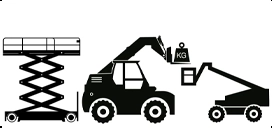
In Emmen, aerial work platforms and construction machinery are rented mainly for industrial work, not for housing construction. The largest agglomeration municipality in the canton of Lucerne is shaped by metalworking, mechanical engineering and aviation technology: steel halls with crane runways, pipe runs above the production lines, workshop buildings from several construction phases and sites that have grown over decades and are being converted to new uses today. For fitters this means two things – they need reach beneath the roof structure and they need platform capacity, because the welding set, cutting torch, hose packages and lifting accessories all go up with them. Our rental fleet covers both, from the compact mast lift to the diesel scissor lift with a capacity of 1,134 kg.
Steel Halls, Crane Runways and Pipe Runs
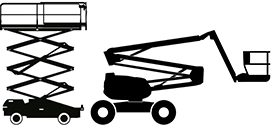
Work on the load-bearing structure is load work. One fitter with equipment, a second providing safety cover, plus profile sections or pipe clamps – the platform has to carry all of that and stay stable while doing so. Scissor lifts are the first choice here: the electric version with 6.30 to 33.00 m working height and platform capacities of 227 to 1,000 kg for work inside the hall, the diesel variants with 9.70 to 34.00 m and up to 1,134 kg for paved outdoor areas and works yards. The large platform saves passing material up piece by piece and gives two fitters room to move, which makes all the difference during overhead welding and cutting work.
Not every point can be approached vertically. Pipe bridges above plant, crane jibs, ventilation ducts behind intermediate platforms and connections on the hall envelope are reached by articulating boom lifts, which swing the basket out over fixed installations; in the electric version from 10.89 to 28.00 m the hall stays free of exhaust fumes. Where only a narrow aisle is free between the machines, high-rack scissor lifts deliver the height from 18.50 m upwards with a minimal footprint. Check the load-bearing capacity of the hall floor in advance: above ducts, pits and basement areas the permissible wheel load is often lower than the surface suggests.
Converting Industrial Sites That Have Grown Over Time
When a site is switched over to new uses, the work begins inside. Suspended ceilings, cable and pipe runs, partition walls and old plant equipment have to come out before the fit-out starts – work that takes place at heights of 6 to 15 m and where the floor is increasingly covered with material. Compact electric scissor lifts get further here than large machines, because they can manoeuvre between skips and scaffold islands. For points in stairwells, shafts and former plant rooms, mast lifts with 10.00 to 12.65 m working height are suitable, as they fit through standard doorways.
Outside, the roof and the envelope follow. Sandwich panels, continuous rooflights, roof edge trims and drainage are usually reached from ground level, often over unpaved ground, because the surfacing around older halls is rarely continuous. Spider lifts with 13.00 to 39.50 m are available for this, spreading their load widely over gravel, crushed stone and softened surfaces. Where the height of a hall roof is not enough – for silos, chimneys or antenna masts on the site, for example – telescopic boom lifts cover 14.00 to 56.90 m.
The Rental Fleet in Figures
| Class | Working height | Platform capacity |
|---|---|---|
| Scissor lifts electric | 6.30 – 33.00 m | 227 – 1,000 kg |
| Scissor lifts diesel | 9.70 – 34.00 m | 363 – 1,134 kg |
| High-rack scissor lifts | 18.50 – 33.00 m | 450 – 1,000 kg |
| Articulating boom lifts | 10.89 – 48.15 m | 150 – 450 kg |
| Telescopic boom lifts | 14.00 – 56.90 m | 227 – 454 kg |
| Mast lifts | 10.00 – 12.65 m | 200 kg |
| Spider lifts | 13.00 – 39.50 m | 200 – 400 kg |
Materials Handling and Earthworks on the Works Site
Handling heavy components is part of assembly work. Telehandlers take on what would otherwise require a crane to be erected: fixed machines from 4.30 to 18.80 m lift height and 1.25 to 25 t capacity, roto models with 15.42 to 38.90 m and 4 to 8 t, which slew the boom and serve several hall bays from a single set-up. For foundations, utility lines and the adaptation of access routes, excavators from 1.8 to 30 t operating weight are available. In-plant transport is covered by forklifts from 3 to 16 t; heavy assemblies can be moved with the heavy-duty versions, and order picking in the warehouse with high-lift stackers up to 5.50 m lift height.
Operator Duties for Assembly Work in a Running Plant
The legal basis for use is the Ordinance on the Prevention of Accidents and Occupational Diseases (VUV); the SUVA enforces it and supervises compliance, and the EKAS guidelines set out the requirements in detail. The inspection of mobile elevating work platforms follows SN EN 280. Every machine leaves our depot with proof of inspection, CE documentation and operating instructions. For assembly work in a running plant there is one further point that applies particularly often in Emmen: hot work on the platform – welding, cutting, soldering – requires a separate assessment with fire protection measures, screening of the surrounding area and arrangements for the fire watch. This assessment, the coordination with crane operations and the instruction of the operators are the hirer's responsibility; so is the visual and functional check before every shift.
Transport to Emmen
Delivery is made with our own low-loaders from Passau; we agree the date and the unloading point in advance. Works sites bring their own rules with them: gate times, registration at the gatehouse, prescribed routes and in some cases a safety briefing before entry. Let us know the responsible contact person, the gate height and the area available for unloading, so that the driver does not end up in front of a closed barrier. Within the site we drive the machines to the point of use under their own power, provided the routes are clear. Anyone who also looks after properties in the city area can combine the job with appointments in Lucerne on a single trip.
Frequently Asked Questions
Which platform will carry two fitters plus welding equipment?
A scissor lift. The electric versions reach platform capacities of 227 to 1,000 kg, the diesel models up to 1,134 kg – which covers people, tools, hose packages and material sections together. Articulating boom lifts carry less by design (150 to 450 kg) and are better suited where obstacles have to be worked around. Tell us the total weight of people and equipment and we will select the appropriate class.
Is welding or cutting permitted on the work platform?
In principle yes, but only within the scope of a separate assessment for hot work. This includes protecting the platform and the hoses against flying sparks, screening the area below, providing extinguishing equipment and, in many plants, a fire watch. Mention the planned application when you enquire so that we can supply a suitable machine. The operational permit is issued by the plant operator.
What wheel load is permitted on our hall floor?
That is determined by the structural design of the building, not by the machine. We supply the wheel and outrigger loads from the operating instructions with every machine, so that the plant engineering department can release the area. Critical areas are those above ducts, pits, basement areas and floor slabs added later. Where there is any doubt, load spreading plates or a lighter machine are the safe option.
Which machine is suitable for interior strip-out in older workshop buildings?
Usually a compact electric scissor lift from 6.30 m working height: narrow enough to manoeuvre between skips and scaffolding, strong enough for dismantled material. For shafts, stairwells and plant rooms, mast lifts with 10.00 to 12.65 m are the better solution because they fit through standard doorways. As soon as the floor is covered with rubble over a large area, the travel route should be cleared before work starts.
Can several machines be provided at the same time for a shutdown?
Yes, multi-machine orders are the norm for plant shutdowns. It makes sense to report the requirement early and to reserve the machines for the entire shutdown window rather than ordering more day by day. We coordinate delivery and collection so that the vehicles arrive at the gate one after another and the routes within the plant are not blocked.
Before you enquire, it is worth looking at the designs: at Rent a lifting platform you will find all platform types from the scissor lift to the truck-mounted platform with their strengths, typical applications and operator duties.