Rent aerial work platforms and construction machinery in Lancy
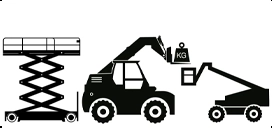
Lancy lies immediately south-west of Geneva city centre and is one of the most densely built-up municipalities in the agglomeration. Anyone looking to rent aerial work platforms and construction machinery here is almost always working between existing rows of flats, over underground car park decks and along traffic routes that leave hardly any set-up space. Luibl rents out aerial work platforms, telehandlers, excavators and forklifts to construction firms, facade contractors, building services engineers and property managers in Lancy and across the rest of the canton of Geneva. In this location, the choice of machine depends less on the maximum possible working height than on the footprint, the outrigger width, the clearance dimensions and the permissible point load of the ground. That is exactly where our advice starts: first the constraints at the site, then the model.
High-rise facades in dense residential development
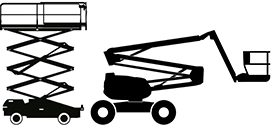
The residential high-rise buildings in Lancy stand closely staggered, and the gaps between the structures are narrower than their height would suggest. For facade work, balcony refurbishment, window replacement and installations on the building envelope this means: a machine has to reach the full height and still be able to be set up in an alley that cannot be widened. Telescopic boom lifts reach up to 56.90 m working height and bring the necessary outreach with them, without the machine having to stand directly in front of the facade. Where a penthouse parapet, a canopy or a projecting balcony band is in the way, articulated boom lifts are the better choice: they reach up to 48.15 m and guide the platform over the obstacle to the work position.
Two points decide the deployment. First, the outrigger support: underground car park decks, service trenches and planted courtyards cannot take a point load; here load spreading plates belong in the planning and the structural analysis of the built-over area belongs on the table. Second, the wind. As the boom length increases, sensitivity to wind grows, and between high-rise buildings the air flow accelerates further in the gaps. The decisive figure is the limit value stated in the manual of the respective machine; if it is exceeded, operation must be stopped. Plan facade sections so that work at great height can be postponed in unfavourable weather without bringing the whole construction sequence to a standstill.
In occupied buildings that remain in use, the time schedule comes on top of this. Entrances, visitor parking spaces and children's play areas must remain clear or be cordoned off. A machine that can be repositioned under its own power between two sections saves more time here than any additional reach. For work in stairwells, entrance halls and underground car parks, electric scissor lifts and compact mast lifts with 10.00 to 12.65 m working height complete the range.
Railway and infrastructure works in the development area
The second focus in Lancy lies at the tracks. Around the railway station and the adjoining development area, access structures, coverings, retaining structures and technical equipment are being built, and a considerable part of this work takes place close to the tracks. There it is not the rental fleet that sets the pace, but the track possession. Anyone scheduling a machine for a night-time window or a weekend closure needs equipment that is already in place when the possession begins, with the operators instructed and able to work without any further manoeuvring.
For work on catenary masts, signal gantries, noise barriers and underpass decks, tracked lifts with 13.00 to 39.50 m working height are in demand: they cope with ballast, lineside access paths and unpaved embankments in places a wheeled chassis cannot reach, and their tracked undercarriage spreads the load over a larger area. On paved access roads and site tracks, diesel scissor lifts with working heights from 9.70 to 34.00 m and platform capacities up to 1,134 kg take over — the highest platform capacity in the rental fleet, when material and two people have to go up at the same time.
Coordination with the railway operator, the safety lookouts and the earthing are the responsibility of the executing company. Luibl supplies the machine with a valid test certificate, technical documentation and operating instructions; which additional equipment is required in the track area follows from the operator's approval and should be clarified before ordering.
The rental fleet in figures
| Class | Working height | Platform capacity |
|---|---|---|
| Electric scissor lifts | 6.30 – 33.00 m | 227 – 1,000 kg |
| Diesel scissor lifts | 9.70 – 34.00 m | 363 – 1,134 kg |
| High-bay scissor lifts | 18.50 – 33.00 m | 450 – 1,000 kg |
| Articulated boom lifts | 10.89 – 48.15 m | 150 – 450 kg |
| Telescopic boom lifts | 14.00 – 56.90 m | 227 – 454 kg |
| Mast lifts | 10.00 – 12.65 m | 200 kg |
| Tracked lifts | 13.00 – 39.50 m | 200 – 400 kg |
Material, excavation and handling on confined sites
Where there is no room for a storage area, every pallet is handled twice — or once, if the right machine is standing ready. Telehandlers in rigid form cover 4.30 to 18.80 m lift height with 1.25 to 25 t capacity and place facade elements, scaffolding material and roof structures beyond the first row. If the machine cannot drive around the building, the roto version with 15.42 to 38.90 m and 4 to 8 t plays to its strengths: it slews the boom into the courtyard from one fixed position. For use in underground car parks and enclosed halls, electric telehandlers with 5.85 to 30.00 m and 2.5 to 7 t are available.
In civil engineering and utility construction, the fleet of excavators covers 1.8 to 30 t operating weight — from the compact machine for house connections between parked vehicles to the machine for excavation pits and utility lines. For materials handling and internal logistics, forklifts from 3 to 16 t as well as high-lift stackers with 2.70 to 5.50 m lift height and 1.2 to 2.0 t capacity complete the range.
Test certificates and operator duties in Switzerland
Swiss law applies to deployments in Lancy. The basis is the Ordinance on the Prevention of Accidents and Occupational Diseases (VUV) together with the Labour Act and its associated ordinances; enforcement and supervision lie with the Swiss National Accident Insurance Fund (Suva), supplemented by the guidelines of the Federal Coordination Commission for Occupational Safety (EKAS). The recurring inspection of mobile elevating work platforms follows SN EN 280, the Swiss adoption of EN 280.
The roles are clearly separated. Luibl hands over every machine with a valid test certificate, CE documentation and operating instructions. The risk assessment, the selection of personal protective equipment and the instruction of the operators at the site are the hirer's responsibility. The visual and functional check before starting work is an operator duty and, in a densely built-up environment, should also cover the set-up area: cordoning, a rescue plan from the platform and the condition of the surface beneath the outriggers.
Transport to Lancy
We organise transport from Passau with our own fleet of vehicles. Lancy is connected via the motorway junctions of the Geneva agglomeration; the last hundred metres are decisive. Before scheduling, the access width, the turning radii, the headroom of underground car park ramps and underpasses as well as possible night-time deliveries should be clarified. Where a low-loader cannot reach the set-up area, we plan the unloading point and the machine's own travel route with you. For projects that extend across several municipalities, we coordinate delivery with the deployments in Geneva; collection and machine changes run through the same contact person.
Frequently asked questions
Which aerial work platform reaches the roof edge of a residential high-rise in Lancy?
That depends on the building height and on the distance you have to keep from the facade. Telescopic boom lifts cover 14.00 to 56.90 m working height and work with a large outreach from a distance. If a balcony band or a penthouse parapet is in the way, the articulated boom lift with up to 48.15 m guides the platform over it. Tell us the building height, the distance to the facade and the available set-up area, and we will narrow down the models.
How is the machine supported on an underground car park deck?
Driving and setting up on the deck of an underground car park is only permitted if the structural analysis allows it. What is needed are the permissible area and point loads from the existing documentation and, as a rule, load spreading plates under the outriggers. We will give you the machine weight and the outrigger forces of the intended model, so that your site management or an engineering office can issue the approval. Assessing the structure remains with the operator.
At what wind speed must work on a high-rise facade be stopped?
The decisive figure is the limit value from the operating instructions of the machine in use. Between closely spaced high-rise buildings the wind accelerates in the gaps and is often stronger at the platform than measured at ground level. Plan work at great height with a buffer and in sections that can be postponed. An anemometer at the platform is part of the equipment of the machines in the upper height classes.
Which machine is suitable for work close to the tracks in the development area?
On ballast, lineside access paths and embankments, tracked lifts with 13.00 to 39.50 m working height are the practical solution, because the tracked undercarriage spreads the load and can also travel on unpaved surfaces. On paved site tracks, diesel scissor lifts with up to 34.00 m and a high platform capacity are an option. The approval for the track area, the safety lookouts and all railway-side requirements are obtained from the operator by the executing company.
Can a machine be provided for a night-time track possession?
Yes, provision outside regular working hours can be planned by arrangement. It makes sense to deliver the machine before the possession begins, set it up and instruct the operators, so that the time window remains fully available for the work. Let us know closure times, access and parking position early on, so that transport and collection fit in with them.
Working height, outreach and ground conditions determine the right machine. A comparison of all designs with costs and inspection duties is available at Rent a lifting platform: platform types, costs and applications.