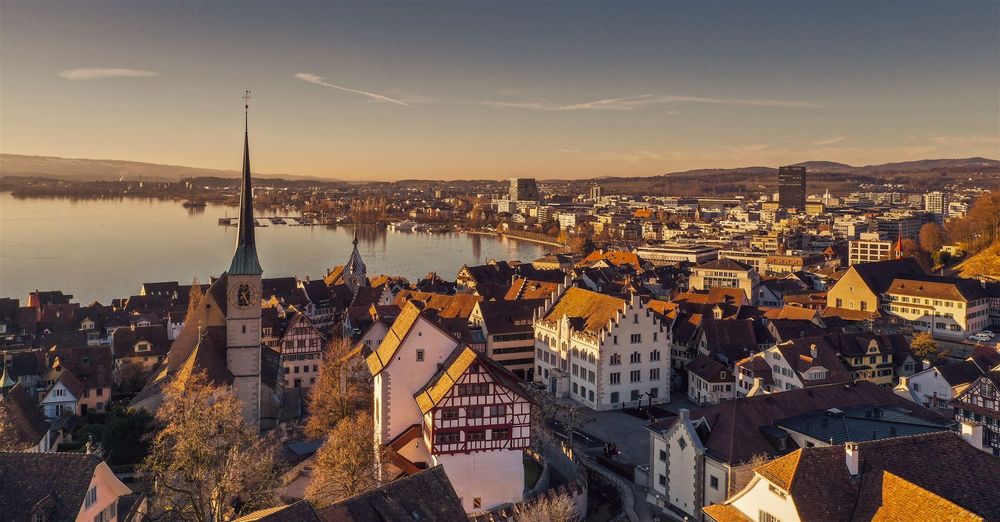
Rent aerial work platforms and construction machinery in Zug
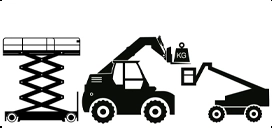
In Zug, building rarely happens on a greenfield site. Plots are scarce, development is dense, and a large part of the work takes place in buildings that already stand — frequently in rooms that are fully fitted out or occupied. Anyone looking to rent aerial work platforms and construction machinery here therefore looks first at what the machine leaves behind: marks on the floor, exhaust fumes in the air, pressure on the slab, contact with a glazed surface. Luibl hires out mobile elevating work platforms, telehandlers, excavators and forklifts to interior fit-out and drywall companies, building services, electrical and ventilation firms, facade and glazing contractors and facility service providers in the town and canton of Zug. We derive the choice of model from the boundary conditions: access route, door dimensions, permissible floor loading, room height and the lateral reach required.
Interior fit-out in a finished room: floor, glass and tyres
In high-quality interior fit-out, working height is rarely the problem. The problem is the route to get there. Parquet, natural stone, designer flooring and raised floors react sensitively to point loads and abrasion, and in reception areas, conference floors and lobbies a mark is made more quickly than it is removed. What is required, therefore, is non-marking tyres, a clean chassis, electric drive and, depending on the covering, a protective layer along the travel route. Clarify in advance as well what distributed load the floor slab can take — on upper floors and above underground car parks that, and not the reach, is the real limiting factor in the selection.
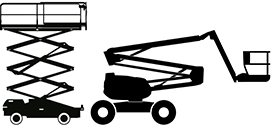
For the standard fit-out tasks — ceiling installation, lighting, sprinklers, ventilation outlets, media technology — electric scissor lifts with 6.30 to 33.00 m working height and 227 to 1,000 kg platform capacity are the machines of choice. In narrow corridors and in areas that have already been finished, mast lifts with 10.00 to 12.65 m and 200 kg come into play: small footprint, low weight, precise positioning.
Tall interiors are a task of their own. Stairwell voids, atriums and entrance halls call for height inside the building, and precisely where the free standing area is small and irregular — a gallery edge, a step, a podium. If the area beneath the workplace is not sufficient, electric articulating boom lifts with 10.89 to 28.00 m working height bring the platform to the target from the side, from a position that will bear the load. Establish the sequence of movements in advance: where the platform slews, where the boundary to the glazing runs, who keeps watch from below.
Glass and metal facades: extra reach instead of driving up close
The second half of the tasks lies outside. Curtain wall facades of glass and metal are cleaned, readjusted, sealed and partly replaced; added to this are solar shading, fall protection and lighting. What these jobs have in common is that the machine cannot or may not drive right up to the structure: forecourts, planters, plinth glazing and underground car park decks are in the way. What counts is the lateral reach at the required height — the ability to work from a more distant position that will carry the load.
Telescopic boom lifts cover 14.00 to 56.90 m working height at 227 to 454 kg platform capacity and are the class for tall, continuous facades. If the platform has to be taken around a projection, under a canopy or over a parapet, articulating boom lifts with 10.89 to 48.15 m take over. On soft or newly landscaped surroundings, spider lifts with 13.00 to 39.50 m have the advantage, because the track gear distributes the load.
The second factor at the facade is the wind. Gustiness increases with height, and at the corners of tall buildings and between two structures effects arise that are not noticeable on the forecourt. The permissible wind speed is not a general figure but is laid down individually for each machine and documented in the operating manual — as are the limits for inclination and for loads that increase the wind-exposed area of the platform. On wind-exposed facades, plan for the possibility that a working day may have to be moved, and keep an indoor task ready for it.
The rental fleet in numbers
| Class | Working height | Platform capacity |
|---|---|---|
| Scissor lifts, electric | 6.30 – 33.00 m | 227 – 1,000 kg |
| Scissor lifts, diesel | 9.70 – 34.00 m | 363 – 1,134 kg |
| High-rack scissor lifts | 18.50 – 33.00 m | 450 – 1,000 kg |
| Articulating boom lifts | 10.89 – 48.15 m | 150 – 450 kg |
| Telescopic boom lifts | 14.00 – 56.90 m | 227 – 454 kg |
| Mast lifts | 10.00 – 12.65 m | 200 kg |
| Spider lifts | 13.00 – 39.50 m | 200 – 400 kg |
Tight plots: materials handling, excavation and material flow
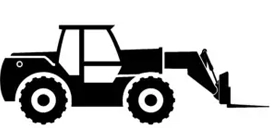
On densely built plots, space for the site set-up is the scarcest commodity. Telehandlers with a rigid boom lift 1.25 to 25 t to between 4.30 and 18.80 m and take on the material flow where a crane would find no standing area; the roto version with 15.42 to 38.90 m and 4 to 8 t sets loads down across existing buildings and enclosures without the machine being repositioned. For work inside buildings, electric telehandlers from 5.85 to 30.00 m are available.
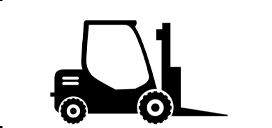
In earthworks and service line construction, the fleet of excavators ranges from 1.8 to 30 t operating weight; between existing buildings, utility lines and excavation support it is frequently the smallest class that will still do the job which decides matters. For materials handling, electric forklifts from 3 to 16 t and high-lift stackers with 2.70 to 5.50 m lift height complete the range. Where no route to the point of installation remains, the mini crane is what is left.
Inspection, instruction and responsibility at the place of work
Swiss occupational safety law applies to assignments in the canton of Zug. What governs is the Ordinance on the Prevention of Accidents and Occupational Diseases (VUV), embedded in the Labour Act and its ordinances; SUVA carries out enforcement and supervision, and the directives of the Federal Coordination Commission for Occupational Safety (EKAS) make the requirements specific. The recurring inspection of mobile elevating work platforms is carried out in accordance with SN EN 280.
From us comes the technical basis: an inspection certificate, CE documentation and operating manual for every machine. What remains with the hirer is the assignment itself — the risk assessment for the set-up location, instruction of the operator, protective equipment, a rescue plan for the platform and the visual and functional check before work begins. In buildings in use, coordination with the operator is added: access, working hours, cordoning off from public traffic, protection of floors and glazing, fire alarm system and escape routes. These points belong in the assessment before the machine is in the building.
Transport to Zug
Transport runs from our Passau site; the distance is around 550 kilometres. As far as Zug the journey via the motorway is straightforward; the detailed planning begins at the plot. Dense development means little stopping space for the low-loader and often access via an underground car park or a courtyard. For work inside buildings we need the dimensions of the route in advance: gate width and gate height, turning radii, door openings, load-bearing capacity of ramp and slab, and the dimensions of a goods lift if the machine is to reach the floor that way. For projects spread across the region — for example additionally in the Zurich or Lucerne area — we coordinate delivery, machine changes and collection through one contact person.
Frequently Asked Questions
Which aerial work platform leaves no marks on finished floors?
An electrically driven machine with non-marking tyres and a cleaned chassis. On parquet, natural stone and sealed coverings, a protective layer along the travel route is additionally recommended. More important than the tyres is the distributed load: check in advance what the floor slab can take — the possible machine size follows from that.
How do you reach the height in an atrium or a stairwell void?
Not necessarily from below. If the area beneath the workplace is small, stepped or not load-bearing, you work from a load-bearing position beside it and use the lateral reach. Electric articulating boom lifts with 10.89 to 28.00 m working height take the platform over gallery edges and flights of stairs. To work out the specification we need the room height, the distance and the dimensions of the standing area.
At what wind strength does facade work have to be interrupted?
That is not a general figure but is laid down for each machine and documented in the operating manual. At the corners of tall buildings and between two structures the loading is moreover higher than what is noticeable at ground level. Take into account as well the wind-exposed area of the load in the platform.
Can an aerial work platform be set up above an underground car park?
Only after examination. What is decisive is the permissible distributed and point load of the slab and the position of the downstand beams; both come from the structural design of the property, not from an estimate made on site. Load spreader plates reduce the point load but do not replace the clearance. If the area remains in doubt, we select a lighter machine or a position beside it.
Is it possible to work in an office building in use without disrupting operations?
As a rule yes, provided the boundary conditions are clarified beforehand. What is usual is work at off-peak times, a cordoned-off travel route, protective layers on the floor and a fixed contact person at the operator for access, lift and fire alarm system. Emission-free machines are a precondition. Tell us the time windows and we will align delivery, instruction and collection with them.
Which design suits your job? The overview Rent a lifting platform – all platform types at a glance explains scissor lifts, articulating and telescopic boom lifts, mast, spider and truck-mounted lifts and shows what the rental price depends on.