
Rent aerial work platforms and construction machinery in Usti nad Labem
Anyone deploying aerial work platforms and construction machinery in Usti nad Labem does not plan by calendar weeks, but by turnaround windows. Chemical plants, power station units and the transhipment operations on the Elbe shut their installations down for a limited period — and in those few days everything runs at once: pipework, repairs to the boiler house and filter system, crane runway inspection, scaffolding. The density of machines in a confined space is high, and the restart date is fixed.
Shutdown planning: machine density in the turnaround window
A turnaround window is not a construction schedule with a buffer, but a fixed time slot between shutting the plant down and starting it back up. Whatever is not finished within it slips by months; the equipment demand falls entirely on a few days.
The machine list should therefore be settled before work preparation goes into detail. We reserve equipment by arrangement for defined time slots. Set the end of the rental period generously — an extension costs less than a second delivery in the middle of the turnaround.
Boiler house, filter system, pipe rack: access with platform capacity
Inside the plant, working height alone is rarely the deciding factor. Fitters go up in pairs with a welding set, tools and spare parts. Add it up before you enquire: people with protective equipment, equipment, material, reserve — that total determines the machine class.
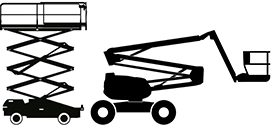
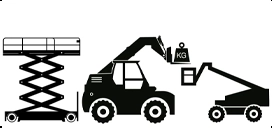
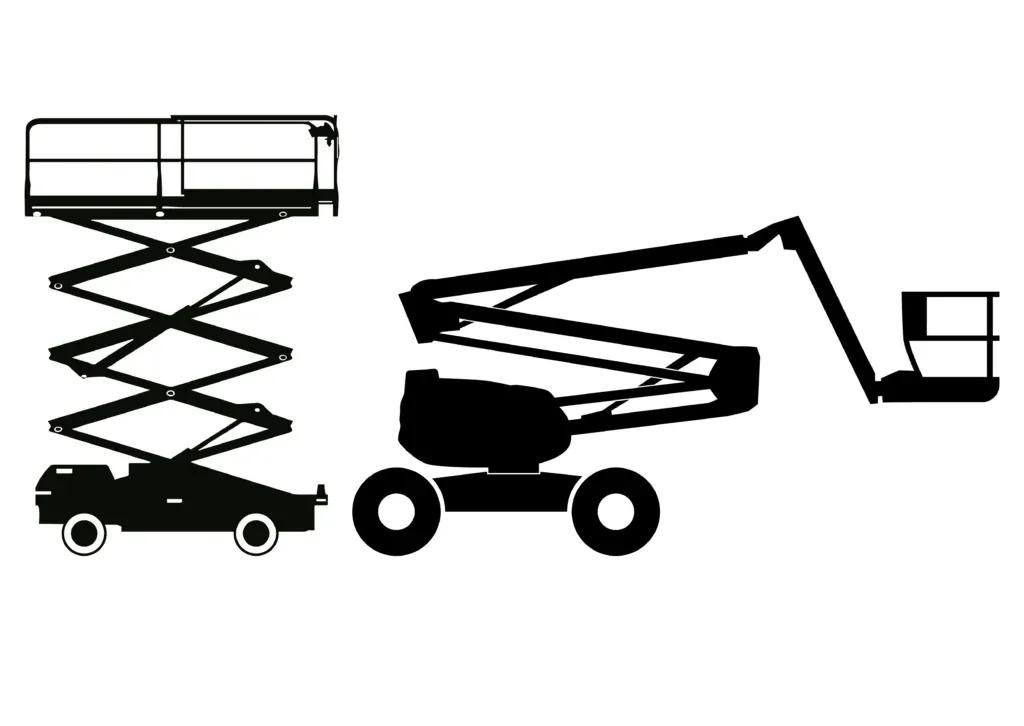
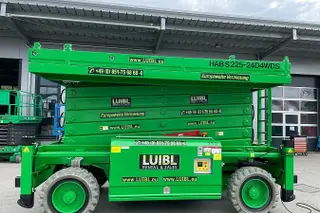
The highest capacities come from diesel scissor lifts with 9.70 to 34.00 m working height and platform capacities from 363 to 1,134 kg. In the boiler house and in enclosed parts of the plant, where exhaust emissions are out of the question, electric scissor lifts up to 33.00 m and 1,000 kg handle the same task with zero local emissions.
Work points behind pipe racks, conveyor systems or filter housings can rarely be reached directly. There you need up-and-over reach rather than capacity: articulating boom lifts work across obstacles at 10.89 to 48.15 m, and the electric versions up to 28.00 m indoors as well. For chimneys and tall vessels, telescopic boom lifts with 14.00 to 56.90 m deliver the greatest working height in the range.
The rental fleet in figures
| Class | Working height | Platform capacity |
|---|---|---|
| Scissor lifts electric | 6.30 – 33.00 m | 227 – 1,000 kg |
| Scissor lifts diesel | 9.70 – 34.00 m | 363 – 1,134 kg |
| High-rack scissor lifts | 18.50 – 33.00 m | 450 – 1,000 kg |
| Articulating boom lifts | 10.89 – 48.15 m | 150 – 450 kg |
| Telescopic boom lifts | 14.00 – 56.90 m | 227 – 454 kg |
| Mast lifts | 10.00 – 12.65 m | 200 kg |
| Spider lifts | 13.00 – 39.50 m | 200 – 400 kg |
Transhipment areas on the Elbe: quay edge, bulk goods, settlement
At the port and on the adjoining transhipment areas, a machine almost never stands on continuous concrete: bulk-goods residues, railway tracks, compacted ballast and long-standing settlement shape the ground. On top of that comes the quay edge — backfill and sheet-pile zones tolerate point loads far less well than the machine weight suggests.
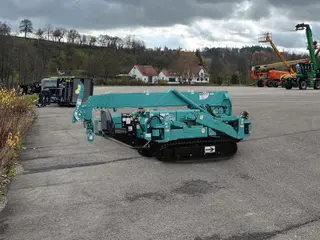
The sequence is therefore: first clarify load-bearing capacity and distance from the edge, then choose the machine class. Where the machine is set down on outrigger pads, point load acts instead of distributed load — load-spreading plates belong in the planning, not in the remedial work. For set-up points without a trafficable access route, spider lifts with 13.00 to 39.50 m are the answer: tracked undercarriage, the lowest ground pressure in the rental fleet. In the racking aisles of the transhipment warehouses, high-rack scissor lifts with 18.50 to 33.00 m do the work.
Telehandlers, excavators and forklifts for plant and port
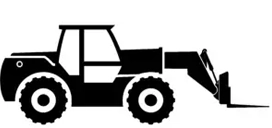
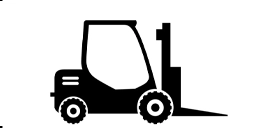
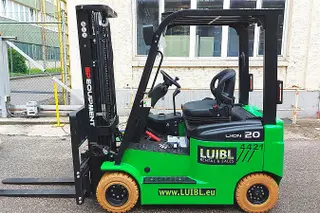
Where there is no crane, the telehandler takes over material transport: fixed models up to 18.80 m lifting height and 25 t capacity, roto models with 15.42 to 38.90 m and a slewing upper structure that saves repositioning in cramped works yards. Excavators cover 1.8 to 30 t operating weight — from the mini excavator for service trenches to the 30-tonner for bulk excavation. For handling in halls and warehouses, forklifts from 3 to 16 t are available, and for light maintenance in occupied buildings mast lifts with 10.00 to 12.65 m.
Proof of inspection and operator duties under Czech law
Which duties apply at the workplace is decided by the law of the country of use — not by the origin of the machine or of the hirer. In the Czech Republic, government regulation NV 378/2001 Sb. is the governing instrument; it carries a separate annex for equipment for lifting loads and persons. The inspection of mobile elevating work platforms follows CSN EN 280, with the Labour Code (Zakonik prace, 262/2006 Sb.) and Act 309/2006 Sb. providing the framework. Every machine leaves our yard with a valid proof of inspection, CE documentation and operating instructions; risk assessment, operator instruction and the check before work begins remain with you.
On chemical and power station sites, works regulations are added on top: site access permit, work clearance certificate, Ex zones, requirements on the type of drive. Clarify these points before delivery — they determine the choice of machine more often than the working height does.
Transport to Usti nad Labem
From our Passau site it is around 330 km to Usti nad Labem, mostly by motorway. Transport is handled by our own low-loaders and partner hauliers, and the date is coordinated with your shutdown planning. For turnarounds, a delivery window before the plant is shut down is advisable, so that the equipment is already on site and handed over when the work starts. Long-term rental terms apply from a rental period of several months.
Before you enquire, it is worth looking at the designs: at Rent a lifting platform you will find all platform types from the scissor lift to the truck-mounted platform with their strengths, typical applications and operator duties.
